to our
newsletter
Urban Factories and Industrial Symbiosis. Evaluates the city-factory nexus across technical, economic, and environmental dimensions. Integrating factories into urban settings for sustainable development requires holistic planning. Our approach aims to model, evaluate, and design efficient interfaces for energy, materials, mobility, and space. We emphasize circular economy principles through urban-industrial symbiosis.

In Phase 1, the Urban Factory System Model used is extended by the USDM from URB in order to map and quantify the networking between the factory and the urban system. At the same time, a description model will be developed to understand the resulting potential.
In Phase 2, the focus is on the evaluation of measures and scenarios to enable the seamless integration of production sites into urban landscapes. It will also focus on facilitating the exchange of waste and resources and other positive synergies between urban businesses within the city and surrounding areas.
Principal Investigators
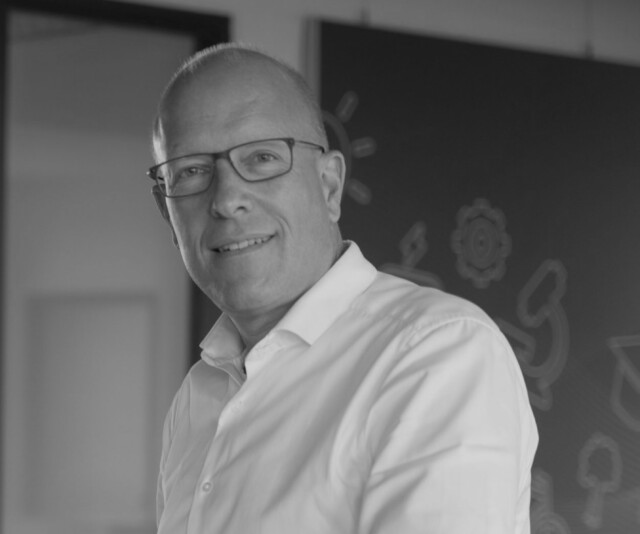
Prof. Dr.-Ing.Christoph Herrmann
SYM | PI
Institute of Machine Tools and Production Technology (IWF)
Technische Universität Braunschweig
www.tu-braunschweig.de/iwf
Prof. Dr.-Ing. Christoph Herrmann is Professor of Sustainable Production and Life Cycle Engineering at TU Braunschweig, where he leads the Institute for Manufacturing Technology and, since 2018, the Fraunhofer IST. Co-leader of the German–Australian “Sustainable Manufacturing and Life Cycle Engineering” group since 2009, he earned his Dr.-Ing. in 2003, habilitated in 2008 and became full professor in 2013. He founded a spin-off (2002–07) developing eco-design tools, served as Scientific Director at KERP Vienna, CEO of the NFF research center and Dean of Mechanical Engineering (2017–19). His award-winning research on resource efficiency and life-cycle management includes over 300 publications. Member of WGP and CIRP.

Dr. -Ing. Mark Mennenga
SYM | Co-PI
Institute of Machine Tools and Production Technology (IWF)
Technische Universität Braunschweig
www.tu-braunschweig.de/iwf
Dr.-Ing. Mark Mennenga is Deputy Director of the Institute for Werkzeugmaschinen und Fertigungstechnik and head of the “System of Systems Engineering” division at TU Braunschweig. He also oversees the Lernfabrik training workshop and coordinates research collaborations with Singapore, Japan and India. His research develops methods and tools for engineering sustainable system architectures, data-driven business models, industrial product-service systems, and digitalized remanufacturing and recycling networks, with a focus on industrial symbiosis and collaborative production. He teaches holistic life-cycle management, operations management and work science, and supervises student theses. His recent publications address urban-industrial symbiosis, real-time condition monitoring and eco-effective manufacturing.

Philipp Grimmel
SYM | PhD candidate
Institute of Machine Tools and Production Technology (IWF)
Technische Universität Braunschweig
www.tu-braunschweig.de/iwf
Philipp Grimmel, is a research associate at the Institute for Werkzeugmaschinen und Fertigungstechnik, TU Braunschweig. His work spans urban production systems, industrial symbiosis and semantic-web technologies for data integration. He leads the ISUrF-Hub project, developing digital platforms to optimize resource flows and circular processes in urban contexts. In addition to supervising student research, Grimmel co-lectures on research & innovation management and operations management, fostering hands-on learning in sustainable manufacturing and service systems. His interdisciplinary approach advances resilient, data-driven frameworks for sustainable urban infrastructures.
The interface between the city and the factory is important for the successful integration of factories into the urban environment. Shared urban resources such as energy, materials and space with information are the key to success. A mutually beneficial utilisation of existing resources requires a fundamental understanding of material, energy and information flows. A suitable concept for this is Juraschek‘s ecotone. Based on observations of the transition zone between natural ecosystems, this concept makes it possible to describe and design the city-factory nexus.
●P. Grimmel, K. Knecht, G. Abou Jaoude, M. Mennenga, O. Mumm, C. Herrmann, and V. M. Carlow, “Research framework for urban industrial symbiosis,” in EcoDesign for Circular Value Creation: Volume I, S. Fukushige, T. Nonaka, H. Kobayashi, C. Tokoro, and E. Yamasue, Eds. Singapore: Springer Nature Singapore, 2025, pp. 407–426. https://doi.org/10.1007/978-981-97-9068-5_26
●P. Grimmel, J. F. Niemeyer, C. F. Tan, Y. Sun, Y. Zhao, N. Schöling, et al., “Urban–industrial symbiosis recommendation platform for urban factories: Leveraging historical exchange patterns through feature analysis for real‐world applications,” J. Ind. Ecol., vol. 29, no. 3, pp. 656–669, 2025.https://doi.org/10.1111/jiec.70015
●P. Grimmel, C. F. Tan, J. F. Niemeyer, Z. Yeo, M. Mennenga, M. Hermsen, Y. Sun, Y. Zhao, and C. Herrmann, “Collaboration platform for enabling industrial symbiosis: Integrated knowledge graph database,” Procedia CIRP, vol. 122, pp. 395–400, 2024. https://doi.org/10.1016/j.procir.2024.01.057
●K. Meyer, S. J. Görgens, C. Persch, K. Dröder, and C. Herrmann, “Technologies and concepts for e-waste treatment in urban secondary raw material factories,” in Sustainable Manufacturing as a Driver for Growth: Proceedings of the 19th Global Conference on Sustainable Manufacturing, December 4–6, 2023, Buenos Aires, Argentina, Cham: Springer, Jan. 2025, pp. 445–453. https://doi.org/10.1007/978-3-031-77429-4_49
●K. Meyer, S. J. Görgens, C. Persch, K. Dröder, and C. Herrmann, “UPFLOW: cross-scale and cross-domain framework for integrated perspectives on urban production and flows,” Discover Cities, vol. 2, p. 45, Apr. 2025. https://doi.org/10.1007/s44327-025-00092-0
●S. Kara, C. Herrmann, and M. Hauschild. „Operationalization of life cycle engineering. Resources, Conservation and Recycling”, 2023, 190, 106836. https://doi.org/10.1016/j.resconrec.2022.106836
●M. Gebler, M. Juraschek, S. Thiede, F. Cerdas, and C. Herrmann, “Defining the ‘Positive Impact’ of sociotechnical systems for absolute sustainability: a literature review based on the identification of system design principles and management functions,” Sustainability Science, vol. 17, no. 6, pp. 2597–2613, Jun. 2022. https://doi.org/10.1007/s11625-022-01168-1
●C. Herrmann, M. Juraschek, P. Burggräf, and S. Kara, “Urban production: State of the art and future trends for urban factories,” CIRP Ann. Manuf. Technol., vol. 69, no. 2, pp. 764–787, 2020. https://doi.org/10.1016/j.cirp.2020.05.003
●S. Rudolf, M. Dellbrügge, F. Kreuz, M. Juraschek, M. Mennenga, U. Clausen, and C. Herrmann, “Influencing Factors of Urban Factories and Their Products for Sustainable Urban Development,” Procedia CIRP, vol. 116, pp. 167–172, 2023. https://doi.org/10.1016/j.procir.2023.02.029
●C. Herrmann, L. Büth, M. Juraschek, T. Abraham, and L. Schäfer, “Application of biological transformation to foster positive urban production,” Procedia CIRP, vol. 90, pp. 2–9, 2020. https://doi.org/10.1016/j.procir.2020.02.138
●M. Juraschek, M. Becker, S. Thiede, S. Kara, and C. Herrmann, “Life Cycle Assessment for the comparison of urban and non-urban produced products,” Procedia CIRP, vol. 80, pp. 405–410, 2019. https://doi.org/10.1016/j.procir.2019.01.017
●M. Suvarna, L. Bueth, J. Hejny, M. Mennenga, J. Li, Y.T. Ng, C. Herrmann, and X. Wang, X.: Smart Manufacturing for Smart Cities - Overview, Insights, and Future Directions (2020). Advanced Intelligent Systems, Vol 2. https://doi.org/10.1002/aisy.202000043
●M. Gebler, J. F. Cerdas, S. Thiede, and C. Herrmann, “Life cycle assessment of an automotive factory: Identifying challenges for the decarbonization of automotive production – A case study,” J. Clean. Prod., vol. 270, p. 122330, 2020. https://doi.org/10.1016/j.jclepro.2020.122330
●T. G. Gutowski, J. M. Allwood, C. Herrmann, and S. Sahni, “A Global Assessment of Manufacturing: Economic Development, Energy Use, Carbon Emissions, and the Potential for Energy Efficiency and Materials Recycling,” Annual Review of Environment and Resources, vol. 38, no. 1, pp. 81–106, 2013. https://doi.org/10.1146/annurev-environ-041112-110510
●J. R. Duflou, J.W. Sutherland, D. Dornfeld, C. Herrmann, J. Jeswiet, S. Kara, M. Hauschild, K. Kellens, K. “Towards energy and resource efficient manufacturing: A processes and systems approach”. CIRP Annals - Manufacturing Technology, 2012, 61(2), 587-609. https://doi.org/10.1016/j.cirp.2012.05.002
●S. Rudolf, M. Juraschek, M. Mennenga, and C. Herrmann, “Urbane Produktion: Potenziale der funktionalen Integration von Stadt und Fabrik,” in Die Produktive Stadt: (Re-) Integration der Urbanen Produktion, Berlin, Heidelberg: Springer, 2023, pp. 117–138. https://doi.org/10.1007/978-3-662-66771-2_7
●G. Abou Jaoude, M. Mennenga, K. Meyer, O. Mumm, C. Herrmann, and V. M. Carlow, “Policies to Support Urban Manufacturing: A Case Study of Germany,” pnd - rethinking planning, vol. 2023, no. 1, pp. 7–22, Jan. 2023. https://doi.org/10.18154/RWTH-2023-04096
●M. Dellbrügge, S. Rudolf, F. Kreuz, M. Juraschek, C. Herrmann, and U. Clausen, “Resilience of Urban Factories and Their Supply Chains – Identification of Indicators and Recommendations for Increasing Resilience,” in Advances in Resilient and Sustainable Transport: Proceedings of the 6th Interdisciplinary Conference on Production, Logistics and Traffic 2023, Jan. 2023, pp. 293–305. http://dx.doi.org/10.1007/978-3-031-28236-2_18
●M. Juraschek, L. Büth, and C. Herrmann, “Die Handlungsfelder effektiver Stadtfabriken für die nachhaltige Entwicklung im urbanen Raum,” in Aktuelle Ansätze zur Umsetzung der UN-Nachhaltigkeitsziele, Berlin, Heidelberg: Springer, 2019, pp. 519–536. http://dx.doi.org/10.1007/978-3-662-58717-1_28
●M. Juraschek, B. Vossen, H. Hoffschröer, C. Reicher, and C. Herrmann, “Urbane Produktion: Ökotone als Analogie für eine nachhaltige Wertschöpfung in Städten,” in Interdisziplinäre Perspektiven zur Zukunft der Wertschöpfung, Wiesbaden: Springer Fachmedien, 2018, pp. 195–207. http://dx.doi.org/10.1007/978-3-658-20265-1_15