to our
newsletter
Integrated planning of sustainable mobility and the urban environment. Explores the nexus of mobility and urban systems, analyzing their impacts on land, resources, and energy (Phase I). It then designs sustainable mobility scenarios (Phase II), essential for societal and economic development while addressing climate change. Balancing individual needs with climate goals is crucial in transport planning for urban sustainability.

The aim of phase 1 is to analyse and evaluate the interactions between urban structures, mobility behaviour and climate impacts. For this purpose, a multimodal model is being developed to investigate various concepts and derive climate-relevant indicators. Of particular importance here is the systematic combinability with other models such as e-mobility, automated driving and various Mobility-as-a-Service (MaaS).
Based on the concepts from phase 1, these will now be evaluated in order to formulate holistic scenarios for more climate-friendly transport in urban environments in collaboration with the other work packages.
Principal Investigators
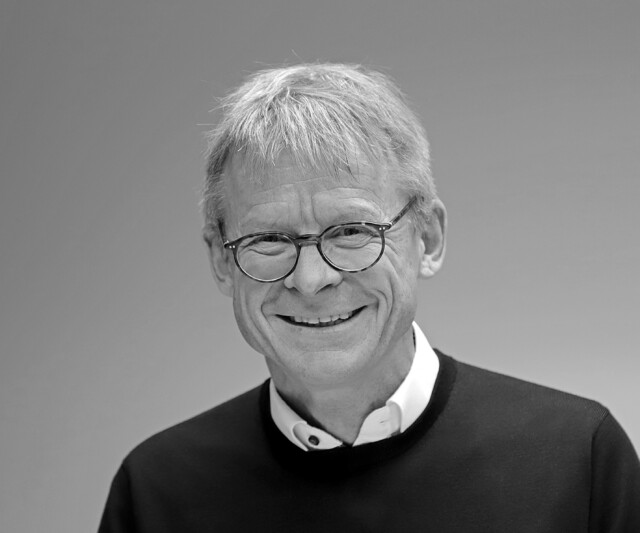
Prof. Dr.-Ing.Bernhard Friedrich
MOB | PI
Institute of Transportation and Urban Engineering (IVS)
Technische Universität Braunschweig
www.tu-braunschweig.de/ivs
Prof. Dr.-Ing. Bernhard Friedrich has directed the Institute for Verkehr und Stadtbauwesen at TU Braunschweig since 2007. From 2000 to 2007, he served as Professor of Road Traffic Planning and Operation at Leibniz University Hannover. He co-founded and led the engineering firm TRANSVER (1995–2000). A graduate of TU München, he earned his Diplom in Civil Engineering in 1990 and his Dr.-Ing. in 1995, where he remained as a research associate until 1995. An active member of acatech, FGSV, ITS Bavaria, EURO Working Group Transportation, DVWG and NFF, he has received the Max-Erich Feuchtinger and Bruno Wehner Medal, the BMW Scientific Award and a EURO operations research laureate prize.

Dr.-Ing. Lasse Bienzeisler
MOB | Postdoc
Institute of Transportation and Urban Engineering (IVS)
Technische Universität Braunschweig
www.tu-braunschweig.de/ivs
Dr.-Ing. Lasse Bienzeisler is a postdoctoral researcher and head of the Transport Demand Modeling Group at the Institute of Transport and Urban Engineering at TU Braunschweig (since February 2025). From 2017 to 2025, he worked there as a research associate. He studied Transportation Management (B.Sc., Ostfalia University of Applied Sciences, 2013) and Mobility and Transport (M.Sc., TU Braunschweig, 2016). For his master’s thesis on simulating autonomous vehicles in MATSim, he was awarded the 2016 Hermann Appel Prize for Future Mobility.
Completed projects include: Cross-sectional Recommendations for Overpasses and Underpasses of Rural Paths as well as USEfUL and USEfUL XT. He is currently involved in the regional transport model for the Braunschweig metropolitan area.
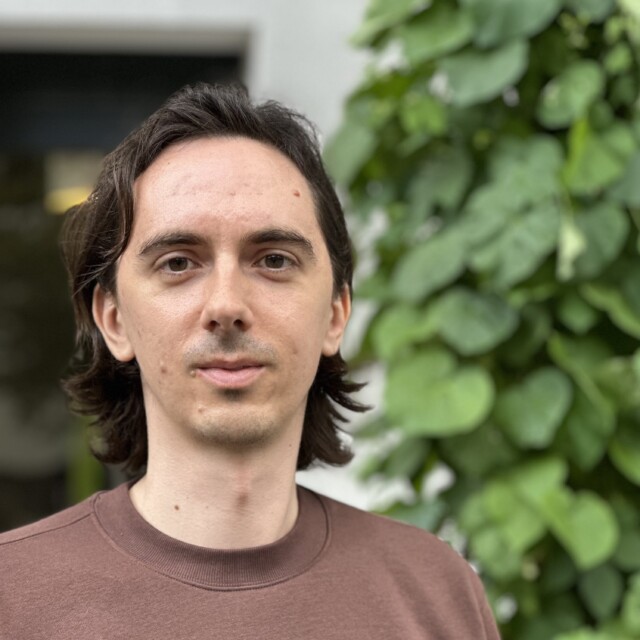
Felix Petre
MOB | PhD candidate
Institute of Transportation and Urban Engineering (IVS)
Technische Universität Braunschweig
www.tu-braunschweig.de/ivs
Felix Petre holds a Master’s degree in Transportation Engineering from TU Braunschweig, with a thesis on agent-based modeling for the Hannover region. He also studied Aerospace Engineering and earned a Bachelor’s in Industrial Engineering with a focus on satellite-based space debris removal. Felix has experience in traffic planning, infrastructure design, and process optimization through roles at B/M Consult and Volkswagen. He has strong data analysis skills (Python, Pandas) and working knowledge in media and software development. He spent a year in California as part of a student exchange. He speaks German, English, and French.
Agent-based models enable the detailed observation of the mobility of individuals and the simultaneous observation of a large area. This allows greenhouse gas and noise emissions to be continuously analysed in space and time, but also mitigation measures such as MaaS concepts. PI Friedrich has conducted numerous interdisciplinary research projects using agent-based simulations to analyse traffic loads. Results of this research include the formulation of methods for generating input for agent-based models and their application and calibration. There is also preliminary work on the design and effects of demand-oriented transport systems, as well as analyses of the influence of urban structure on mobility behaviour.
●Fourati, W.; Friedrich, B. (2021): A Method for Using Crowd-Sourced Trajectories to Construct Control-Independent
Fundamental Diagrams at Signalized Links. Transportation Research – Part C, Volume 130,
September 2021. https://doi.org/10.1016/j.trc.2021.103270
●Bienzeisler, L.; Lelke, T.; Wage, O.; Thiel, F.; Friedrich, B. (2020): Development of an Agent-Based
Transport Model for the City of Hanover Using Empirical Mobility Data and Data Fusion. Transportation Research
Procedia, Volume 47, 2020, Pages 99-106, ISSN 2352-1465. https://doi.org/10.1016/j.trpro.2020.03.073
●Haas, I. and Friedrich, B. (2018): An autonomous connected platoon-based system for city-logistics: Development
and examination of travel time aspects. Transportmetrica A: Transport Science, 2018. https://doi.org/10.1080/23249935.2018.1494221
●Czioska P., Kutadinata R., Trifunović A., Winter S., Sester M., Friedrich B. (2019): Real-world meeting
points for shared demand-responsive transportation systems. (2019) Public Transport, 11 (2), pp. 341 - 377. https://doi.org/10.1007/s12469-019-00207-y
●Rinke, N.; Schiermeyer, C.; Pascucci, F.; Berkhahn, V.; Friedrich, B. (2017): A multi-layer social force approach
to model interactions in shared spaces using collision prediction, Transportation Research Procedia,
Volume 25, 2017, Pages 1249-1267, ISSN 2352-1465. https://doi.org/10.1016/j.trpro.2017.05.144
●Friedrich, B. (2016): The Effect of Autonomous Vehicles on Traffic. In: Maurer, M., Gerdes, J., Lenz, B.,
Winner, H. (eds) Autonomous Driving. Springer, Berlin, Heidelberg. http://dx.doi.org/10.1007/978-3-662-48847-8_16
●Axer, S.; Friedrich, B. (2016): A Methodology for Signal Timing Estimation Based on Low Frequency Floating
Car Data: Analysis of Needed Sample Sizes and Influencing Factors. Transportation Research Procedia,
15 (2016), 220-232. https://doi.org/10.1016/j.trpro.2016.06.019
●Pascucci, F.; Rinke, N.; Schiermeyer, C.; Friedrich, B.; Berkhahn, V. (2015): Modeling of shared spaces
with multi-modal traffic using a multi-layer social force approach. Transportation Research Procedia, 10
(2015), 316-326. https://doi.org/10.1016/j.trpro.2015.09.081
●Pohlmann, T.; Friedrich, B. (2013): A combined method to forecast and estimate traffic demand in urban
networks. Transp.Research Part C: Emerging Technologies, Volume 31, 2013, Pages 131-144. https://doi.org/10.1016/j.trc.2012.04.009
●Priemer, C.; Friedrich, B. (2009): "A decentralized adaptive traffic signal control using V2I communication
data," 2009 12th International IEEE Conference on Intelligent Transportation Systems, St. Louis, MO, USA,
2009, pp. 1-6. https://doi.org/10.1109/ITSC.2009.5309870