to our
newsletter
Holistic accounting and climate-friendly transformation of urban open spaces, researches and optimizes urban open spaces' climate resilience amid climate change. It evaluates both green spaces' positive impacts like stormwater management and cooling, and grey, sealed spaces' negative impacts. Phase I analyzes these impacts and interlinkages with settlements and immaterial aspects. Phase II develops climate-friendly scenarios for sustainable urban transformation based on new insights.
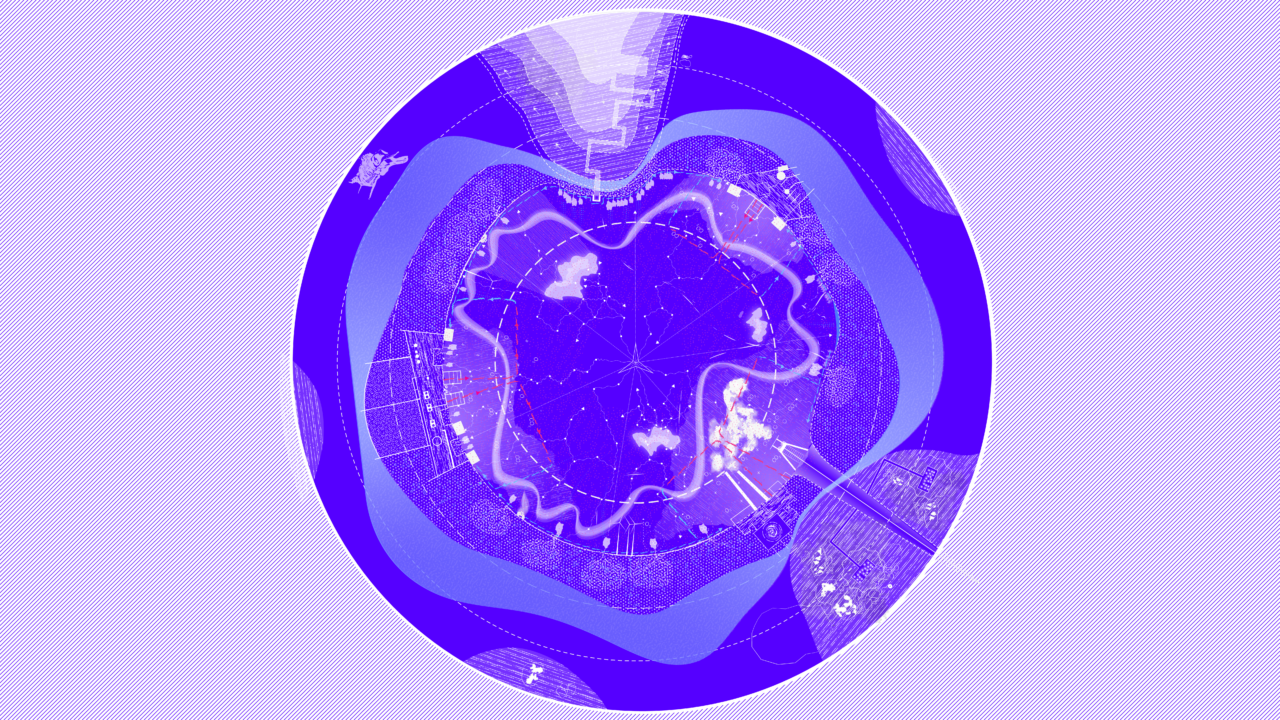
In Phase 1, the climate impacts of different types of urban open spaces, their interrelationships with other types of settlement and immaterial aspects are analysed. This perspective has not yet been developed and therefore offers a unique basis for further scenarios for the development of urban settlements with the new findings.
Based on the new findings from phase 1, climate-friendly scenarios for a sustainable urban transformation will be developed from the perspective of open spaces. The aim is to integrate this perspective into the development of transferable methods and recommendations for climate-friendly scenarios for sustainable urban transformation.
Principal Investigators
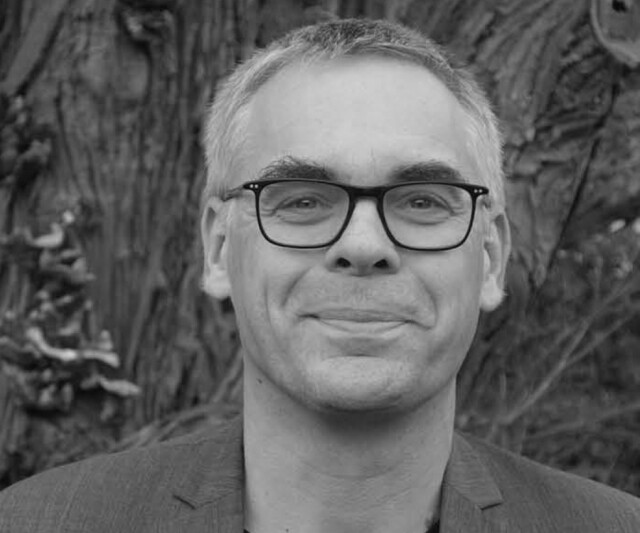
Prof. Dr.-Ing.Martin Prominski
OPEN | PI, Co-Speaker UCFL
Institute of Open Space Planning and Design (IF)
Leibniz University Hannover
www.freiraum.uni-hannover.de
Prof. Dr.-Ing. Martin Prominski is a Professor of Urban Landscape Development and Head of “Entwerfen urbaner Landschaften” at Leibniz University Hannover (since April 2009). He is Managing Director of the Institute for Freiraumentwicklung and chairs the Landscape Architecture Master’s selection committee. His research focuses on qualifying urban landscapes under climate crisis, design-based research methods and landscape architecture in the Anthropocene. After earning a Diploma in Landscape Planning from TU Berlin (1996) and an MLA from Harvard GSD (1998), he completed his Dr.-Ing. on landscape design (2003). He previously held posts at TU Berlin, Harvard and Hargreaves Associates.

Dag-Ole Ziebell
OPEN | PhD candidate
Institute of Open Space Planning and Design (IF)
Leibniz University Hannover
www.freiraum.uni-hannover.de
Dag-Ole Ziebell is a landscape architect with a strong background in gardening and landscaping, developed through an apprenticeship from 2013 to 2016. He holds a Bachelor’s degree in Landscape Architecture and Environmental Planning and a Master’s degree in Landscape Architecture from Leibniz University Hannover. Throughout his academic and professional journey, Dag-Ole Ziebell has gained hands-on experience in design, construction, and urban landscape development. Currently, Dag-Ole Ziebell is pursuing a PhD within the Urban Climate Future Lab and works as a research associate at Leibniz University Hannover. His research focuses on the climate impact of open spaces in Lower Saxony, with a specialization in the dynamic relationship between the human skin and landscape—an approach rooted in his Master’s thesis on skin-preventive landscape architecture.
Urban open spaces can play an important role in climate-friendly urban redevelopment. In recent years, specific topics of urban open spaces such as water retention or thermal protection by tree canopies and water bodies have been intensively researched. In addition to this element-oriented approach, there are also general satellite-based instruments for monitoring urban vegetation areas for climate adaptation measures, which can be helpful for holistic balancing in UCFL. However, the main focus is on the creation of scenarios using visual methods that enable a systematic integration of several urban open space elements, which does not yet exist. PI Prominski is involved in the practical research project „Gute Küste Niedersachsen“ with two comparable three-year phases. He has extensive experience in design research and „research by design“ as a basis for the development of scenarios.
●Carlow V.; Hong Y.W.; Generic Design Tools to Produce Site-Specific Solutions: Three Projects. In: Urbanization
and Locality, F. Wang and M. Prominski, Eds. Berlin, Heidelberg: Springer, 2016.
●Prominski M./ Stokman A./ Zeller S./ Stimberg D./ Voermanek H./ Bajc K./ Zheng N. (2023; Third and enlarged
Edition) River. Space. Design. Basel, Birkhäuser.
●Wang F./ Prominski M. (Eds.) (2020) Water-Related Urbanization and Locality: Protecting, Planning and
Designing Urban Water Environments in a Sustainable Way. Singapore, Springer.
●Prominski, M./ Seggern, H. von (Eds.) (2019) Design Research for Urban Landscapes. Theories and Methods.
London, Routledge.
●Prominski, M. (2019) “Designing Landscapes of Entanglement.” In: Braae, E./ Steiner H. (Eds.): Routledge
Research Companion to Landscape Architecture. London, Routledge: 167-179.
●Ruan, Huiting and Martin Prominski (2021) Understanding and developing locality with a non-representational
approach: Cases of waterfront spaces along the river Rhine. River Research and Applications, December
2021. http://dx.doi.org/10.1002/rra.3923
●Prominski, M. (2016) “Using design research to develop design guidelines.” In: van den Brink et al. (Eds.)
Research in Landscape Architecture. Methods and Methodology. London, Routledge: 194-208.
●Wang F./ Prominski, M. (Eds.) (2016) Urbanization and Locality - Strengthening Identity and Sustainability
by Site-specific Planning and Design. Heidelberg, Springer.
●Prominski, M. (2014) Andscapes: Concepts of nature and culture for landscape architecture in the ‘Anthropocene’.
Journal of Landscape Architecture 9(1):6-19. http://dx.doi.org/10.1080/18626033.2014.898819
●Prominski, M./ Maaß, M./ Funke L. (2014) Urbane Natur gestalten. Entwurfsperspektiven zur Verknüpfung
von Naturschutz und Freiraumnutzung. Basel, Birkhäuser.