to our
newsletter
Resources focuses on assessing stored resources and CO2 emissions in residential, non-residential, and infrastructure buildings. It analyzes energy consumption profiles for heating, cooling, and electricity to develop future scenarios. RES aims to identify exemplary urban structures and their emissions, resources, and operational needs, modeling transformation effects for scenarios.
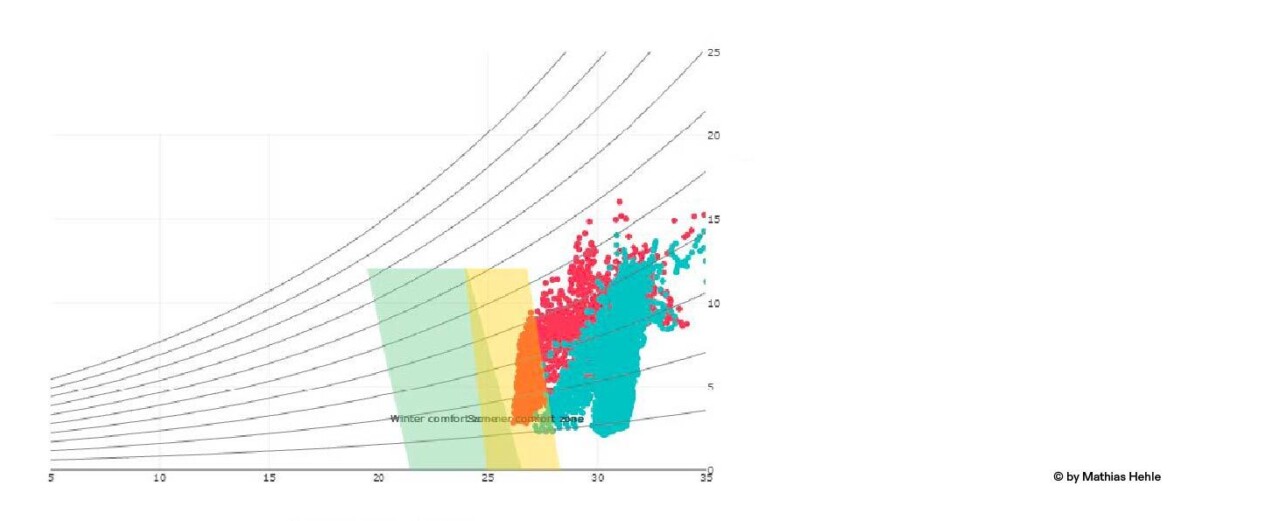
The aim of phase 1 is to identify examples of municipal and urban structures. To this end, the settlement types provided by URB are analysed in order to be able to make generally valid statements about similar types for typical building areas and usage profiles. This allows these structures to be validated in terms of the emissions they store and generate, the resources available and the operational requirements.
Based on this assessment, the effects of transformation processes are modelled for scenarios. The main focus here is on the sector coupling of electricity, heat supply strategies, the possibility of storing electricity in structures and fluctuating generation from wind and solar energy.
Principal Investigators
Prof. Elisabeth Endres
RES | PI
Institute for Building Climatology and Energy of
Architecture (IBEA)
Technische Universität Braunschweig
www.tu-braunschweig.de/ibea
Prof. Dr.-Ing. Elisabeth Endres is Ordinaria of Building Technology at TU Braunschweig, where she has led the Institute for Building Climatology and Energy in Architecture since 2019. She earned her Diploma in Architecture at TU Kaiserslautern and TU Munich, then served on TU Munich’s faculty (2004–2018), creating the Energy-Efficient Sustainable Building curriculum and winning the 2010 Teaching Excellence Award. Since 2013 she has been project director—and since 2018 a board member—at Hausladen Ingenieure. Her research addresses passive climate control, CO₂-neutral construction and robust building systems. Endres is a BDA member, Sep Ruf Society board member and sits on Berlin’s monument council and Hamburg’s HafenCity advisory board.

Mathias Hehle
RES | PhD candidate
Institute for Building Climatology and Energy of
Architecture (IBEA)
Technische Universität Braunschweig
www.tu-braunschweig.de/ibea
Mathias Hehle is a research associate at the Institute for Building Climatology and Energy in Architecture at TU Braunschweig. He completed a visiting PhD at the University of Florence (2023–2024) and from 2012 to 2019 held roles across Germany’s energy sector: co-leading a solar silicon startup, working in a utility’s energy-market department, assisting the CEO of an energy-contracting firm, and leading corporate development and M&A. Hehle holds master’s-equivalent degrees in industrial engineering from TU Braunschweig/ETH Zurich and in mechanical engineering (energy and process technology) from TU Braunschweig.
In urban structures, there is a great dependency between urban density, layout, mixed use, energy standard of buildings, renewable energy supply and urban climate. From an overall ecological perspective, the inclusion of embodied energy is a key factor in relation to building structures and infrastructure as a material store. The integration of embodied energy and the local potential of renewable energy systems into strategies and calculations enables sustainable project development in research and practice. PI Endres has research projects in the urban planning context focussing on the interplay of renewable energy supply, technical systems and resource-efficient construction and the preservation of existing buildings with low-tech strategies.
●Zhu, P.; Mumm, O.; Zeringue, R.; Endres, E.; Carlow, V.; “Building-related resource use in Chinese eastern
cities – Qingdao building stock as a case study”. Applied Energy, 313, p. 118697, 2022. https://doi.org/10.1016/j.apenergy.2022.118697
●Hutter, C.; Eberle, A.; Wöhrle, H.; Neubert, L.; Hausladen, G.; Endres, E.; Klinski, S. (2023). Kühle Gebäude
im Sommer - Anforderungen und Methoden des sommerlichen Wärmeschutzes - 5.6.3 Diskussion,
Kirchheim: UBA
●B. Breitenhuber, P. Bruno, E. Endres, A. Klinge, J. Mehnert, J. Mönig T. Pörschke, E. Roswag-Klinge.
(2023). Gesundes, zukunftsfähiges Wohnen in Holz, Ziegel und Lehm, (DBU) 37391/01.
●P. Zhu, O. Mumm, R. Zeringue, E. Endres, V. Carlow. (2022). Building-related resource use in Chinese
eastern cities – Qingdao building stock as a case study”. Applied Energy, 313, p. 118697. https://doi.org/10.1016/j.apenergy.2022.118697
●E. Endres (2020). Hightech versus Lowtech oder einfach robust? in: Bundesinstitut für Bau-, Stadt- und
Raumforschung (BBSR) im Bundesamt für Bauwesen und Raumordnung (BBR) (ed.), Lowtech im Gebäudebereich
●E. Endres, L. Franke, M. Sen Dong, L. Neubert. (2019). Parameters to design Low-Tech Strategies, in TU
Delft/TUM (ed.) PowerSkin Conference Proceedings
●G. Hausladen, F. Antinori , M. Conteduca, E. Endres, D. Santucci. (2019). Performative design and quality
of architecture. Façade Engineering for IBM Headquarters in Rome, in TECHNE - Journal of Technology for
Architecture and Environment, (18). https://doi.org/10.13128/techne-7541
●D. Santucci, F. Tucci, E. Endres, G. Hausladen. (2018). Smart urban districts: Dynamic energy systems for
synergic interactions between building and city, in TECHNE - Journal of Technology for Architecture and
Environment, (1), 92-102. https://doi.org/10.13128/Techne-22741
●E. Endres, D. Santucci, F. Tucci, A. Battisti. (2015). Energie: Bedrohung oder Chanche für die Europäische
Stadtlandschaft? Energia: occasione o minaccia per il paesaggio urbano europeo?, TUM.
●G. Hausladen, E. Endres. (2012). Zukünftige Energiekonzepte für Gebäude und Stadtquartiere, Rundgespräche
der Kommission für Ökologie, Bd.41 "Die Zukunft der Energieversorgung", 63-71, Verlag Dr. Friedrich
Pfeil München
●E. Endres (2022). Weniger Technik, mehr Architektur“, in: Detail, Kreislaufwirtschaft (11.2022), 12-16.
●E. Endres (2022). SUFFIZIENZ VS. EFFIZIENZ – WIEDER SINNVOLL BAUEN, in: polis – URBAN DEVELOPMENT
(2), 50-53.
●E. Endres (2022). Was uns (noch) hindert, einfach zu bauen“, in: Deutsche BauZeitschrift (DBZ) (12).
●E. Endres, G. Hausladen. (2015). Lowtech ist die neue Hightech, in: architese01/2015 Swiss Performance
15.